Stop Job Search Burnout in 72 Hours and Build a Weekly System

If job hunting has started to feel unbearable, stop or sharply cut your application volume for three to five days and protect your evenings and weekends immediately. This is not a personal failing. It's a predictable response to rejection at scale, and it responds well to structural fixes rather than motivation alone. Use the short recovery checklist and the weekly restart plan below to rebuild momentum without repeating the same exhausting pattern.
TL;DR:
- Reducing application volume and taking a short break for three to five days helps interrupt burnout and rebuild motivation without reacting out of exhaustion.
- Focusing on quality over quantity in applications lowers rejection rates and prevents emotional burnout from repetitive low-impact efforts.
- Building a sustainable weekly routine with targeted application sessions, regular social contacts, and tracking process metrics encourages resilience over long job searches.
- Maintaining boundaries around social media, sleep, movement, and realistic expectations can protect mental health and prevent burnout from external and internal pressures.
- When symptoms like persistent insomnia, withdrawal, or thoughts of self-harm occur, consulting a healthcare professional becomes essential beyond routine routine adjustments.
Table of Contents
- Recognising job search burnout and why it happens
- Steps to stop the spiral in the next 24 to 72 hours
- A weekly routine and process that won't wear you down
- Sustaining wellbeing through a long job search
- When burnout needs professional support
- A note on automation and where it responsibly fits
- Managing pressure from family, friends, and yourself
- Keeping motivation over a search that runs longer than expected
- Finding the right support network as a job seeker
- Why boundaries and dignity matter more than hustle
- Sources
- FAQ
Recognising job search burnout and why it happens
Job search burnout is a recognised psychosocial pattern, not a mood. Qualitative research into long-term unemployment in Italy describes it in the same terms clinicians use for occupational burnout: exhaustion, reduced motivation, and gradual withdrawal from the job-seeking process itself, as documented in a qualitative study of long-term unemployment. That framing matters because it shifts the problem from "I'm not trying hard enough" to "this is a known occupational response to a specific set of stressors".
The signs usually show up across three areas at once.
- Behavioural: procrastinating on applications you'd normally send within minutes, rereading the same job posting five times without acting, or applying to roles you know you don't want just to feel productive.
- Emotional: dread before opening your inbox, irritability with people who ask "any news?", a flat sense that nothing will work regardless of effort.
- Physical: disrupted sleep, tension headaches, appetite changes, or a constant low-grade fatigue that doesn't lift after a weekend off.
Burnout tends to progress in stages rather than arrive all at once. In the early stage, you're still applying at volume but starting to skip personalisation, cutting corners on cover letters just to keep the numbers up. In the middle stage, rejection starts to feel personal rather than procedural. This is where the "rejection as social loss" mechanism kicks in: humans process repeated social rejection, even impersonal automated rejections, as a threat to belonging and status, which is why fifty unanswered applications can feel heavier than fifty unanswered emails about anything else. By the late stage, many job seekers stop applying altogether, not because the market has closed but because the emotional cost of continuing has outstripped any perceived benefit.
Pro Tip: If you notice you've started applying to jobs you'd have ignored a month ago just to "keep busy", that's usually the first visible sign of the volume-over-quality trap, not renewed motivation.
The mechanism behind this is worth naming directly: high volume, low-tailoring applications produce more rejections per hour of effort, and each rejection lands with roughly the same emotional weight regardless of how carefully the application was written. Career guidance consistently points to a "reduce volume, increase quality" correction as the structural fix, because it lowers the number of rejection events without necessarily lowering your odds of a match, as outlined in Jobstash's breakdown of job search burnout.
Steps to stop the spiral in the next 24 to 72 hours
You don't need a full life overhaul this week. You need a short, deliberate pause and three or four concrete boundary rules that stick.
- Take a genuine reset, not a guilty one. Three to five days away from job boards, applications, and LinkedIn scrolling is enough to interrupt the exhaustion cycle for most people. If finances are tight and a full pause feels irresponsible, switch to a minimal viable search instead: one or two high-fit applications a day, nothing more, so you're still moving without feeding the spiral.
- Set fixed search hours and stick to them. Pick a window, say 9am to 12pm, and treat anything outside it as off-limits for job boards or recruiter messages. Job seekers who ring-fence their hours report far less of the low-grade dread that comes from feeling permanently "on".
- Check your inbox on a schedule, not on impulse. Twice a day is plenty. Constant refreshing trains your nervous system to associate your phone with anxiety, which outlasts the job search itself if you let it run unchecked.
- Log your pipeline somewhere visible. A simple spreadsheet with company, role, date applied, and status does more for your sense of control than any pep talk. Seeing "12 applications, 4 in progress" is a fact. Seeing nothing but silence in your inbox is a feeling, and feelings lie under stress.
- Write down three small wins from the last week. They don't have to be interview-related. A tailored cover letter you were proud of, a networking message you finally sent, a skill you brushed up on. This counters the tunnel vision that burnout creates, where only offers count as progress.
- Arrange one social check-in that has nothing to do with your job search. Isolation compounds burnout faster than almost anything else. A short public-health brief on job searching and mental health specifically recommends maintaining social contact and daily structure as protective factors, as detailed in Johns Hopkins guidance on mental health while job searching.
The point of this 72-hour window isn't to solve your job search. It's to prove to yourself that stepping back doesn't cause the market to disappear, and that a bit of distance restores enough clarity to plan properly. Most people who take a genuine short reset come back with a sharper sense of which roles are actually worth their energy, rather than applying to everything that vaguely fits.
A weekly routine and process that won't wear you down
Once the immediate spiral has been interrupted, the next task is building a routine you can sustain for months if needed, because most job searches now run longer than people expect. Labour market conditions vary by sector and country, and Eurostat's labour market indicators show how much search duration can shift with the broader economic climate, which is one reason a rigid, high-intensity search rarely survives contact with reality.
A weekly structure that separates activities into distinct blocks, rather than treating "job search" as one undifferentiated task, tends to hold up better under pressure.
| Day | Focus | Approximate time |
|---|---|---|
| Monday | Research and pipeline review | 1.5 hours |
| Tuesday | Focused apply session (batch 1) | 2 hours |
| Wednesday | Networking or a skills task | 1.5 hours |
| Thursday | Focused apply session (batch 2) | 2 hours |
| Friday | Review week, update tracker, plan next week | 1 hour |
| Saturday and Sunday | Fully off | 0 hours |
Two focused apply sessions a week, each capped at two hours, sound modest against the instinct to apply constantly. That's deliberate. Batching applications into two sessions means you're tailoring with a clear head rather than dashing off a cover letter at 11pm out of guilt, and it protects the two full days off that most burnout advice treats as non-negotiable rather than a nice-to-have.
Tailoring itself is where most of the wasted energy hides. A useful discipline here is scoring each posting against three "must-have" requirements and one "desirable" one before you commit any writing time. Only fully tailor your CV and cover letter for postings that score two or three on the must-haves; for anything scoring lower, send a solid generic application or skip it, an approach detailed in Jobstash's scoring method for tailoring. This single rule cuts a huge amount of low-value effort, because it stops you writing a bespoke cover letter for a role you were never a strong fit for in the first place.
When you do tailor, focus on what the posting actually asks for rather than rewriting your whole CV from scratch each time. Matching your existing experience to the top three listed requirements, and cutting anything irrelevant to that specific posting, produces a sharper document far faster than a full rewrite. Some job seekers use AI-assisted CV tailoring to speed up this matching step without losing the personal detail that makes an application credible, though the scoring discipline above matters more than any particular tool.
A simple tracking template keeps the process honest. Columns for company, role, date applied, tailoring score, and status are enough. What you're measuring matters as much as the tracking itself:
- Applications tailored, not just applications sent, since this is the number that reflects real effort and quality.
- Response rate on tailored applications only, tracked privately for your own calibration, not as a public metric to obsess over.
- Hours spent per week, capped and reviewed on Friday, so the process stays inside its box rather than expanding to fill every spare hour.
- Networking touches, counted separately from applications, because relationship-building compounds differently and often surfaces roles that never appear on job boards.
Tracking process metrics rather than outcome metrics is the single biggest shift most burnt-out job seekers need to make. Offers are outside your control on any given week. Applications tailored, hours logged, and networking messages sent are entirely within it, and treating those as your real scoreboard breaks the feedback loop where every unanswered application feels like personal failure.
For readers who want a curated starting point rather than searching cold, a shortlist of the best job boards narrows the field considerably, which matters more than it sounds, since scattergun searching across a dozen platforms is itself a burnout accelerant.
Sustaining wellbeing through a long job search
The habits that get you through week one rarely survive week twelve unchanged, so a long search needs practices built for endurance rather than a sprint.
Sleep is the first casualty of a stressful search and the first thing worth protecting deliberately. A consistent wind-down routine and a fixed wake time do more for daytime resilience than almost any other single change, and public-health guidance on job searching specifically flags routine and structure as protective against the drift that fuels anxiety, as covered in Johns Hopkins' mental health guidance for job seekers. Movement matters almost as much. A daily walk, even twenty minutes, interrupts the sedentary, screen-heavy pattern that most job searching involves and gives your nervous system a physical outlet for accumulated tension.
Nutrition tends to slide quietly during stressful periods, not through any dramatic collapse but through skipped meals and more caffeine than usual. Keeping regular mealtimes, even simple ones, stabilises energy in a way that's easy to underestimate until it's gone.
Social media limits deserve their own line here, because LinkedIn in particular has a specific way of making a job search feel worse. Watching a former colleague announce a new role while you're on application forty-seven is one of the most reliably demoralising experiences a job seeker can have. Setting a fixed daily cap on LinkedIn browsing, or restricting it to the same window as your job search hours, removes a significant source of unnecessary comparison.
Some practical boundaries worth setting explicitly:
- Cap social media browsing to a set time window rather than checking reflexively throughout the day.
- Separate "networking" from "scrolling" by deciding in advance what you're logging on to do.
- Mute or unfollow accounts that consistently trigger comparison, even temporarily, without guilt.
- Schedule one offline social activity a week that has zero connection to your career.
Cognitively, the most useful reframe is separating your identity from your employment status. This sounds obvious written down and is genuinely hard to practise under pressure. A rejection email is information about a specific match at a specific company on a specific day. It is not a verdict on your competence or your worth, however much it can feel that way at 9pm after the fifth "unfortunately" of the week.
Peer support helps more than most people expect, precisely because job searching is often done in isolation when it doesn't need to be. Job-seeker groups, whether informal WhatsApp groups from a previous role or structured career-transition communities, normalise the experience in a way that solo scrolling never does. If the strain starts to feel heavier than ordinary stress, low-cost mental-health options, including short-term counselling through statutory health insurance in Germany, Austria, and Switzerland, or sliding-scale services elsewhere, are worth investigating before things escalate.
When burnout needs professional support
Most job search burnout responds to the structural changes above: less volume, more boundaries, a sustainable weekly rhythm. Some of it doesn't, and it's worth being honest about where that line sits.
Research connecting prolonged unemployment to mental-health strain consistently finds higher stress levels in this group compared with employed populations, a pattern documented in the International Journal of Environmental Research and Public Health. That's a population-level finding, not a diagnosis for any one person, but it's a useful reminder that the strain is real and measurable, not something to simply push through indefinitely.
Certain signs point beyond what a reset week or a better routine can fix on their own.
- Persistent insomnia lasting more than two or three weeks, rather than the occasional bad night before an interview.
- Withdrawal from people you're normally close to, cancelling plans repeatedly, or a flattening of interest in things you used to enjoy.
- Thoughts of self-harm or suicide, which require immediate action: contact a crisis line or emergency services in your country without delay, or speak to a GP the same day.
- A persistent sense of hopelessness that doesn't lift even briefly during good moments, such as a positive interview or encouraging feedback.
If any of the first two signs have lasted more than a couple of weeks, a conversation with a GP or a licensed therapist is a reasonable next step, not an overreaction. In Germany, Austria, and Switzerland, statutory health insurance typically covers a set number of initial psychotherapy sessions, and many practitioners now offer English-language sessions for internationals. Online therapy platforms and directories of licensed psychologists are usually the fastest route to an appointment when local waiting lists run long.
It's worth being clear about the difference between career coaching and therapy, because job seekers sometimes reach for the wrong one. A career coach helps with strategy: positioning, interview preparation, negotiation, narrowing your target roles. A therapist or counsellor helps with the emotional and psychological load itself, including anxiety, low mood, or the identity strain that a long search can produce. If your main struggle is "I don't know what to apply for", a coach is the right call. If your main struggle is "I can't get out of bed to apply for anything", that's a conversation for a mental-health professional, not a career strategist.
A note on automation and where it responsibly fits
Alex covers job search strategy and workplace wellbeing, with a particular focus on how repetitive administrative tasks contribute to candidate burnout.
A large part of what makes job searching exhausting is genuinely mechanical: retyping the same experience into different application forms, reformatting a CV for each portal's quirks, tracking dozens of submissions in your head because you never got around to a spreadsheet. None of that effort improves your chances. It just consumes hours you don't have to spare, which is exactly the kind of load that Appliqu's approach to cutting repetitive application hours is built to reduce.
Appliqu scans more than 100 job boards continuously and reads the full text of each posting, not just keywords, to judge whether a role genuinely fits your profile before anything gets sent. Here's what that looks like in practice, factually:
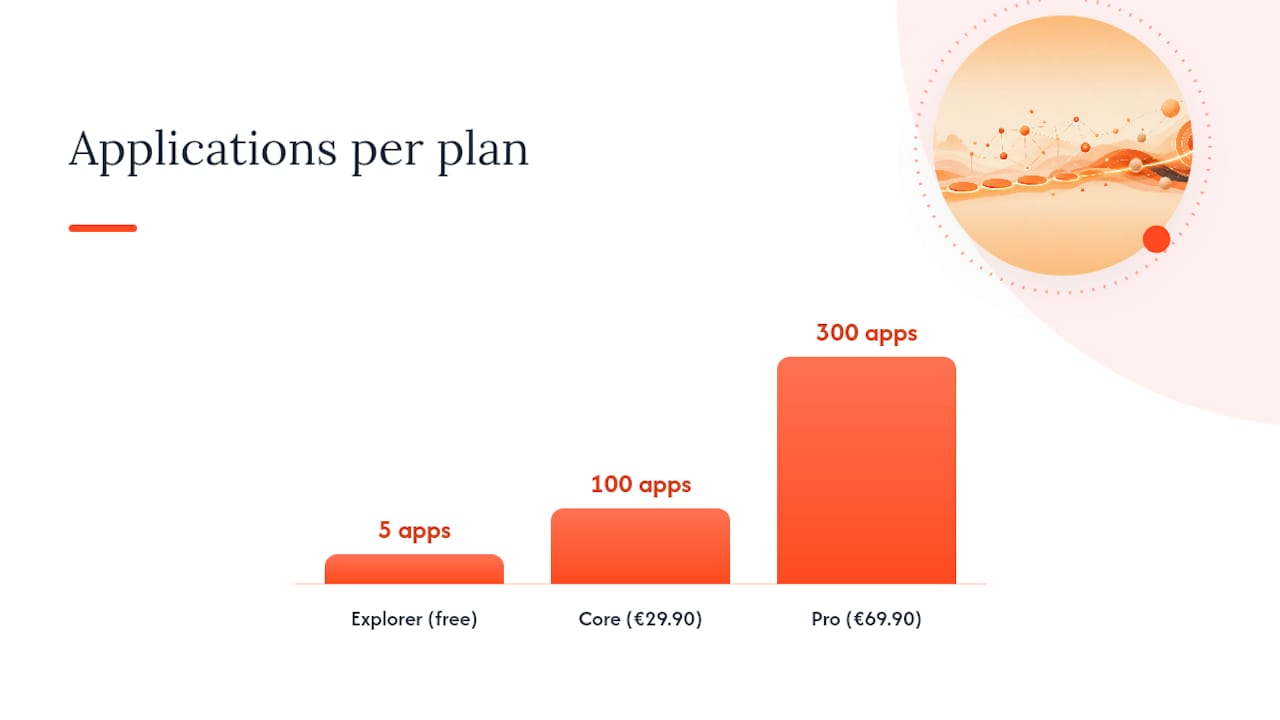
- Explorer is a permanent free tier, and Appliqu writes 5 applications on it so you can see the tailoring quality before committing to anything.
- Core, at €29.90 a month including 19% VAT, unlocks sending and covers 100 applications.
- Pro, at €69.90 a month including 19% VAT, covers 300 applications and adds access to the Appliqu Job Board.
- Concierge, at €199 a month including 19% VAT, covers unlimited applications and includes a session with a senior consultant.
- Every plan runs in either "on approval" mode, where you review each application before it's sent, or Autopilot, where Appliqu sends automatically once a match clears your threshold.
Used well, this is a volume tool in service of a quality strategy, not a replacement for one. The scoring discipline covered earlier, tailoring fully only where you genuinely fit, still applies. Automation removes the hours spent on form-filling and formatting; it doesn't remove the judgement of deciding which roles are worth pursuing in the first place.
Managing pressure from family, friends, and yourself
External pressure often does more damage than the job search itself. Well-meaning relatives asking "any luck yet?" at every gathering, a partner quietly tracking the household budget, your own inner voice comparing your timeline to a friend's six-week job hunt. None of it helps, and most of it isn't meant to hurt, which makes it harder to push back on.
A short, honest script helps more than most people expect. Something like: "I'm applying consistently and I'll let you know the moment there's news, but the constant check-ins add pressure I don't need right now." Most people, once told plainly, adjust. The ones who don't are worth limiting contact with during the search itself, not permanently, just for now.
Financial pressure is harder to script away, but it responds to the same structural logic as everything else here: a minimal viable search that keeps applications moving without demanding constant intensity, paired with an honest look at what a realistic timeline looks like given your sector and the broader labour market conditions Eurostat tracks across the region. Setting expectations with the people funding or supporting you, even loosely, tends to reduce friction more than silence does.
Comparison is the quietest form of external pressure, and often the most corrosive, because it comes from inside rather than from any one conversation. Someone else's faster search says nothing about your prospects. Different sectors, different networks, different luck.
Keeping motivation over a search that runs longer than expected
Motivation built on hope for a specific outcome, "the next application will be the one", collapses the moment enough rejections stack up. Motivation built on process holds up far better, because it doesn't depend on any single result landing.
That's the practical case for the tracker and the weekly rhythm covered earlier: they give you something to feel good about that isn't contingent on someone else's decision. Hitting your planned two focused apply sessions this week is a real, controllable win, even in a week with zero replies.
Small rituals help more than grand gestures. Marking the end of each Friday review with something genuinely enjoyable, not "productive", tells your nervous system that the week has closed properly rather than bleeding into the weekend. Revisiting your three small wins list from earlier in the week does more for morale on a bad day than any pep talk, because it's specific and true rather than generic reassurance.
Resilience over months, rather than weeks, tends to come down to permission: permission to have an off day, permission to take the full weekend, permission to measure progress by effort rather than offers. Job seekers who give themselves that permission early tend to last longer in the search without needing the kind of full stop that burnout eventually forces.
Finding the right support network as a job seeker
Isolation is one of the fastest routes to burnout, and it creeps in quietly because job searching is, by default, a solitary activity done at a laptop.
Peer groups specifically for job seekers, whether structured career-transition communities or informal chats with people in the same boat, do something a supportive partner or friend often can't: they normalise the specific frustrations of the process itself. Someone who has sat through the same silence after the same kind of application understands it differently than someone offering sympathy from outside it.
Former colleagues and alumni networks are worth reactivating deliberately rather than waiting for a chance encounter. A short, specific message, "I'm exploring roles in X, would you be open to a fifteen-minute call about how things have shifted at your company?", tends to land far better than a generic "let me know if you hear of anything".
Professional bodies and industry associations often run their own job boards, mentoring schemes, or informal meet-ups, and these networks tend to surface roles that never reach the open market. If your search has run long enough to feel isolating, treating this outreach as a scheduled weekly task, the same way you'd schedule an apply session, keeps it from being crowded out by the more urgent-feeling work of sending applications.
Why boundaries and dignity matter more than hustle
The job search advice that circulates most widely, apply to everything, follow up relentlessly, treat rejection as fuel, tends to describe the opposite of what actually protects people through a long search. Volume without boundaries doesn't produce more opportunities. It produces more rejection events, and the emotional cost of each one compounds rather than fades.
What's underestimated, based on everything the research and the practical guidance above points to, is how much dignity matters in this process. Not confidence, not positivity, dignity. The sense that you're choosing your effort deliberately rather than reacting to panic, that your worth isn't up for negotiation every time an ATS filters you out before a human ever reads your CV. That distinction shapes how a search feels far more than any single tactic does.
Three commitments are worth trying this week, regardless of where you are in the process. First, pick one boundary from this article, fixed search hours, a social media cap, a scheduled inbox check, and actually hold it for seven days. Second, reach out to one person, a former colleague, a peer group, anyone, purely for connection rather than a job lead. Third, spend thirty minutes on a skill micro-task unrelated to any specific application, because it reminds you that your capability exists independently of any one employer's decision.
Choose process metrics over outcome metrics wherever you can. Applications tailored, hours logged, people contacted. Offers will come when they come, and they were never fully in your control to begin with.
Alex
Sources
- Job Seekers’ Burnout and Engagement: A Qualitative Study of Long-Term Unemployment in Italy
- Caring for your mental health while job searching
- Job search burnout: How to recognise it, recover, and keep going (Jobstash)
- Eurostat labour market indicators
FAQ
How do I job search when I'm already burnt out?
Stop or sharply reduce your application volume for three to five days, protect your evenings and weekends, then restart with a smaller batch of highly tailored applications rather than a high-volume scattergun approach.
Why is Gen Z having a hard time finding jobs?
Younger job seekers often face a higher volume of automated screening and more competition per posting than previous generations experienced, which can lengthen searches and increase the rejection-at-scale effect described earlier in this article; broader labour-market conditions tracked by Eurostat also play a role in how long searches typically run.
What are the stages of job search burnout?
Job search burnout tends to move through an early stage of cutting corners on tailoring to keep volume up, a middle stage where rejection starts to feel personal, and a late stage of withdrawal where applying stops altogether, a progression consistent with the burnout dimensions described in research on long-term unemployment.
How do I stay sane while unemployed?
Keep a consistent daily routine, protect sleep and movement, limit social media comparison, and maintain regular contact with people outside your job search, all of which public-health guidance on job searching identifies as protective against the isolation that drives burnout.
How many job applications a week is realistic without burning out?
There's no universal number, but two focused, tailored application sessions a week, capped at around two hours each, tends to be more sustainable and effective than daily scattergun applying, based on the batching approach outlined by Jobstash.