Find Three Roles Hiring Now: A 30 Minute Job Demand Analysis

Job demand analysis is the weekly practice of identifying which roles employers urgently need, then prioritising and tailoring your applications to match those signals. This week, run a 30-minute scan of postings, reposts and recruiter activity in your field to build a ranked shortlist of three roles. Anchor that scan against a trusted source such as LMI For All rather than gut feeling alone.
TL;DR:
- Repeated repostings and sign-on bonuses indicate stronger and more urgent job demand than single postings or vague advertisements.
- Monitoring posting volume and applicant counts weekly helps confirm whether demand is rising, stable, or declining in your target roles.
- Using quantitative and qualitative signals together prevents misreading transient employer panic as genuine sector growth.
- Automating application tailoring with tools like Appliqu saves time but still requires human oversight to verify relevance and customize messages.
- Focusing on only two roles at a time prevents choice overload and allows for targeted CV and cover letter customization based on demand signals.
Table of Contents
- What are the live signals that show demand right now?
- How do you turn demand signals into tailored applications?
- Where does Appliqu fit in a weekly demand-to-apply routine?
- How would a careers adviser run this with a client?
- Bookmark these for ongoing demand checks
- Let Appliqu handle the applying once you know where demand sits
- Sources
- FAQ
What are the live signals that show demand right now?
Official labour statistics lag by weeks or months. What tells you a role is hot today is behaviour you can observe directly on job boards and LinkedIn within half an hour.
Run through these five checks, in order, and you will have a workable picture of urgency before your coffee goes cold:
- Posting volume in the last 24 to 72 hours. Filter job boards by "posted today" or "last 3 days" for your target title. A sudden cluster across several employers, not just one, usually signals a genuine hiring push rather than a single vacancy.
- Repeated reposts or "rolling" vacancies. A listing that reappears every fortnight, sometimes under a slightly reworded title, tells you the employer is struggling to fill it. That is a stronger demand signal than a fresh single posting.
- Recruiter outreach after you update your profile. Refresh your LinkedIn headline or CV keywords and watch what lands in your inbox over the following week. A rise in unsolicited messages is a live proxy for scarcity in your skill set.
- Explicit demand markers in the advert text. Phrases like "immediate start", sign‑on bonuses, or unusually low experience thresholds for a role that once demanded five years' experience all point to employers under pressure to hire fast.
- Applicant counts, where visible. Some platforms show how many people have applied. A vacancy open a week with under ten applicants, in a popular field, suggests weaker competition than the headline suggests.
Pro Tip: Keep a simple spreadsheet with one row per role and a column for each signal. Score each 1 to 3. Roles scoring highest across multiple signals, not just one, deserve your CV first.
How do you turn demand signals into tailored applications?
A ranked shortlist is only useful once it changes what you write. Score each candidate role on three factors, each out of 5: impact (how much this role would advance your career), likelihood (how strong the demand signals are), and fit (how closely your existing skills match). Multiply the three scores together, and the role with the highest total goes to the top of your queue.
Once you have your top three roles, tailor documents against the specific signals you found:
- Reorder your CV's experience bullets so the achievements matching the employer's stated urgency sit first, not buried on page two.
- Surface hard skills verbatim from the posting, particularly ones repeated across multiple adverts for the same role, since repeated language across postings is a strong shortage signal.
- Use the employer's own phrasing rather than a synonym. If the advert says "stakeholder management", write "stakeholder management", not "cross‑functional collaboration".
- Condense where volume is genuinely high. For roles attracting many applicants, a tighter, more scannable CV beats a longer one crammed with detail.
Your cover letter should answer one question the demand signals already implied: why hire now, and why you? If the posting mentions an immediate start, open by confirming your availability. If it has been reposted twice, address the likely reason head‑on, whether that is a niche skill requirement or a tight deadline.
Pro Tip: Keep two templates ready: a concise version for high‑volume roles where recruiters skim fast, and a deeper, evidence‑led version for niche roles where a hiring manager reads every line.
Where does Appliqu fit in a weekly demand-to-apply routine?
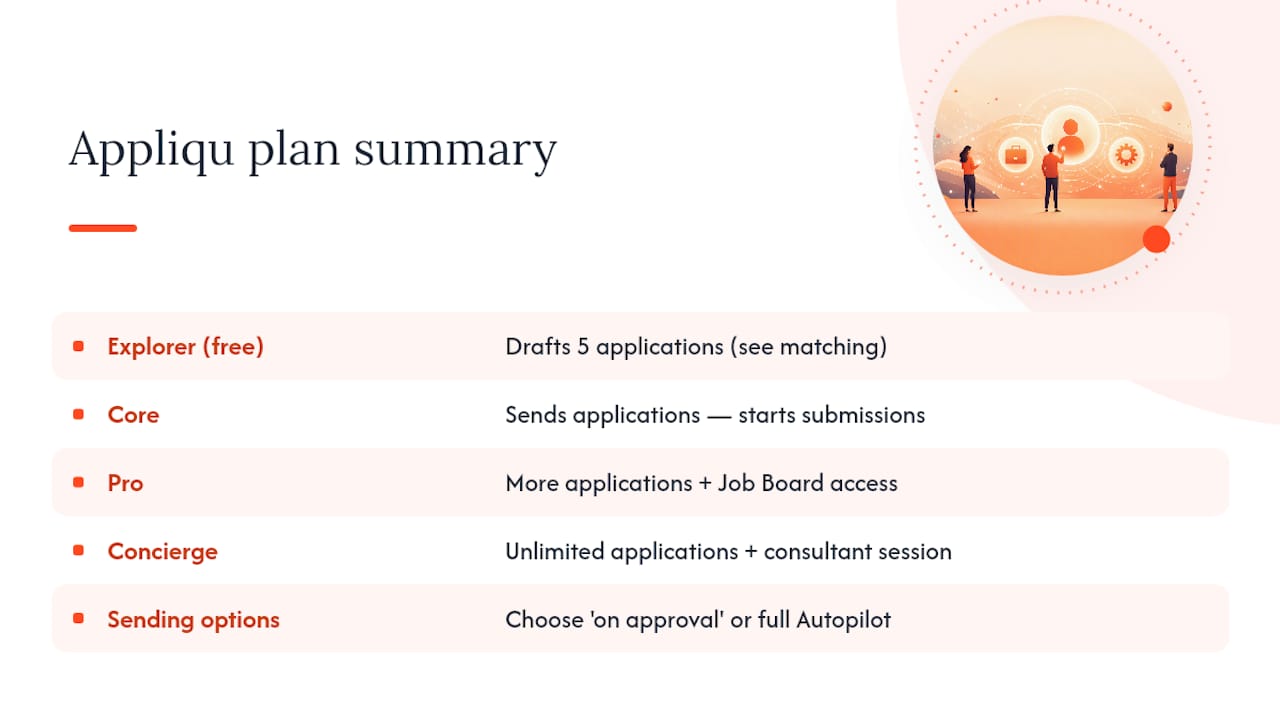
Manual scanning is accurate but slow, which is exactly the gap automation can close without replacing the judgement calls above. Appliqu scans over 100 job portals continuously, using semantic matching that reads the full job description rather than just keywords, then drafts a tailored CV and cover letter for each match. On the permanent free Explorer tier, Appliqu writes 5 applications; actual use requires sending starts with the Core plan.
A workable weekly rhythm looks like this:
- Day 1: Run your 30 minute demand scan using the signals and sources above, and update your shortlist.
- Day 2: Rank the shortlisted roles using the impact, likelihood and fit rubric, and choose your template for each.
- Day 3: Use Appliqu in "on approval" mode to review each drafted application before it sends, or switch to Autopilot once you trust the matches, then check for recruiter replies.
Integrating real‑time labour market intelligence into an individual's job search workflow tends to increase confidence and clarify options, though this remains an area researchers are still exploring. That is the case for pairing manual signal reading with automated sending, rather than choosing one over the other.
Automation still needs a human check. Verify each match against the actual posting, edit any cover letter line that reads generically, and monitor which applications get responses. Blanket automation without role verification wastes both your time and the employer's.
How would a careers adviser run this with a client?
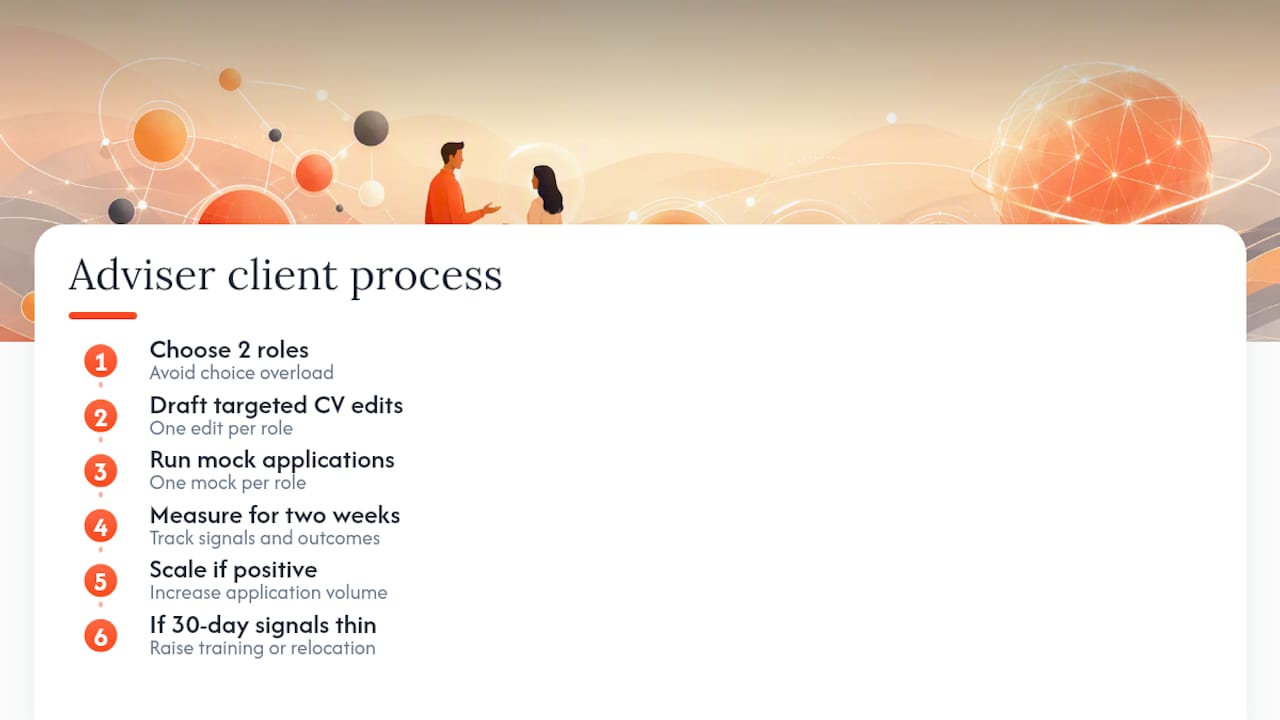
Give a client two roles to focus on, never five. Choice overload kills momentum faster than a slow market does. Draft targeted CV edits for those two, run a mock application each, then measure results over two weeks before scaling volume.
If the 30‑day signals show a role genuinely thinning out nationally, that is when I would raise training or relocation, not before. Demand data should slow down a bad decision, not just speed up a good one.
Alex
Bookmark these for ongoing demand checks
- LMI For All for decision‑focused labour data.
- What Works Growth for evidence on using LMI well.
- Open University LMI guidance and Prospects' Luminate guide for practical, regional detail.
- Appliqu once you are ready to automate the sending stage.
Let Appliqu handle the applying once you know where demand sits
Appliqu is the is an alternative to hours spent manually filling out forms once your demand analysis has told you where to focus: it turns your ranked shortlist straight into tailored applications, so the time you saved scanning postings does not get eaten up retyping the same CV five different ways.

The free Explorer tier lets you see how the semantic matching works, drafting 5 applications so you can judge the quality before committing to anything. If your shortlist runs to more than a handful of roles, the Core plan sends applications and is where actual submission begins. Heavier job seekers can move to Pro for more applications plus access to the Appliqu Job Board, while Concierge offers unlimited applications and a session with a senior consultant for anyone who wants a second pair of eyes on strategy. Every plan lets you choose "on approval" review or full Autopilot sending, so the human check described earlier stays in your hands, not out of them.
Once your weekly scan produces a shortlist, feed it straight into your Appliqu profile and let the tailoring and sending happen while you focus on interview prep.
Sources
Live signals tell you what is happening now, but they miss the underlying context: whether a sector is genuinely growing or a role is one recruiter's temporary panic. Reliable job demand analysis needs both, which is why practitioners lean on a two‑pillar method: quantitative market mapping and qualitative signal testing, run side by side rather than one after the other.
Four categories of source cover most of what you need:
- Effective decision-making and the role of labour market information (LMI) in career guidance. LMI For All
- Using labour market intelligence to make better career decisions. What Works Growth
- Labour market information: a user guide | Luminate
- Using labour market information (LMI): Research the labour market | Help Centre | The Open University
For quantitative mapping, record three figures per role: number of open postings, month‑on‑month growth in that count, and how concentrated the demand is (five employers hiring versus fifty). For qualitative testing, track posting cadence, reposting frequency, and the tone of the advert language.
A national growth figure can mask sharp regional variation, so always cross‑check the Luminate guidance on regional LMI against your local job boards before deciding whether relocating or reskilling makes more sense than waiting.
FAQ
What is job demand analysis in a jobseeker's context?
It is the practice of reading labour market signals, both official statistics and live posting behaviour, to work out which roles employers are actively trying to fill, so you can prioritise and tailor your applications accordingly.
How often should I run a demand scan?
Weekly is enough for most active job seekers; a short, repeated 30 minute check keeps your shortlist current without the choice overload of daily monitoring.
What is the strongest single signal that a role is in demand?
Repeated reposting of the same vacancy over several weeks, combined with incentives like sign‑on bonuses, is a higher‑confidence signal than a single fresh posting.
Does Appliqu replace the need for manual demand analysis?
No. Appliqu automates the tailoring and sending of applications once you have identified target roles, but the human judgement in reading demand signals and verifying each match still matters.