Score Roles in 30 Minutes a Week: Job Market Insights for Job Seekers

Job market insights are the specific data you need to choose and prioritise job applications: skills demand, salary benchmarks, hiring velocity and company signals. The one thing to do now is triage. Score every role you are considering before you write a word of a cover letter, and reserve deep CV tailoring for the handful that score highest. Appliqu, Prospects's career-research framework, and simple job-board analysis all point the same way: fewer, sharper applications beat volume.
TL;DR:
- Prioritize roles with high hiring signals and strong fit scores, focusing application efforts on those above 18 out of 25 points.
- Track reposting and recruiter activity across platforms to assess role urgency and retention issues, not just posted pay ranges.
- Use macro and micro signals, like industry trends and weekly posting changes, to refine your job targeting and adjust salary expectations regionally.
- Conduct short, informational interviews with current employees to gain authentic insights into company culture and hiring likelihood.
- Employ automated tools like Appliqu for continuous job board monitoring and tailored application generation to save time and improve hit rate.
Table of Contents
- What do job market insights actually include?
- How do you score roles before applying?
- How do you turn insights into tailored CVs?
- What weekly routine keeps your market intelligence current?
- How do geography and industry shape job market trends?
- How do economic indicators affect your job search?
- How can you judge a company's culture from market data?
- How should networking connect to your market intelligence?
- Why targeted intelligence beats volume
- Let Appliqu run your job-board tracking for you
- Sources
- FAQ
What do job market insights actually include?
Four things matter, and most job seekers only track one of them.
Skills demand tells you which capabilities keep appearing across postings in your target field. Salary benchmarks give you a realistic pay band before you negotiate, not after. Hiring velocity shows how urgently a company or sector is recruiting right now. Company-level signals cover everything from Glassdoor sentiment to leadership turnover.
Prospects recommends building a shortlist of five to ten roles and assessing each against career development, employment outlook, entry requirements, job description and salary before committing time to any one application. That's macro research: sector-wide patterns you can find in reports and industry commentary.
Micro signals sit underneath that. Tracking postings for the same job title across several platforms for a few weeks reveals posting velocity, repeat hires and hiring urgency, according to one detailed job-market research breakdown. A role reposted three times in six weeks tells you something a single job advert never will: either the company can't find the right candidate, or it can't retain them once hired.
Pro Tip: Treat sites like Glassdoor and Levels.fyi as directional pay guides, not fixed numbers. Cross-check two sources before you set a salary expectation, since self-reported pay data skews toward whoever bothers to submit it.
Practically, this means:
- Build a shortlist of five to ten target roles, not fifty
- Check each posting's repost history where the platform shows it
- Note whether pay ranges are listed or absent (absence is itself a signal)
- Flag companies advertising the same role repeatedly within a quarter
How do you score roles before applying?
A scoring system turns vague enthusiasm into a decision you can defend. Rate every role you're considering on five axes, each out of 5 points:
- Fit: how closely your skills and experience match the core requirements, not the wish-list extras
- Hiring signal: how active and urgent the recruitment appears (fresh posting, reasonable pipeline, no six-month reposting history)
- Pay: where the likely offer sits against your benchmark, not the advertised range alone
- Upside: growth potential, skills you'd gain, or brand value for your next move
- Effort: how much tailoring the application genuinely demands, scored in reverse (lower effort scores higher)
Add the five scores. Anything above 18 out of 25 deserves a fully tailored CV and cover letter. Anything below 12 gets a fast, lightly adapted application or gets skipped entirely.
Take two hypothetical roles. A marketing coordinator post at a fast-growing scale-up scores 4 on fit, 5 on hiring signal (posted this week, no repost history), 3 on pay (slightly below your target), 4 on upside, and 4 on effort (clean requirements, no bespoke portfolio needed). Total: 20. That earns your best work.
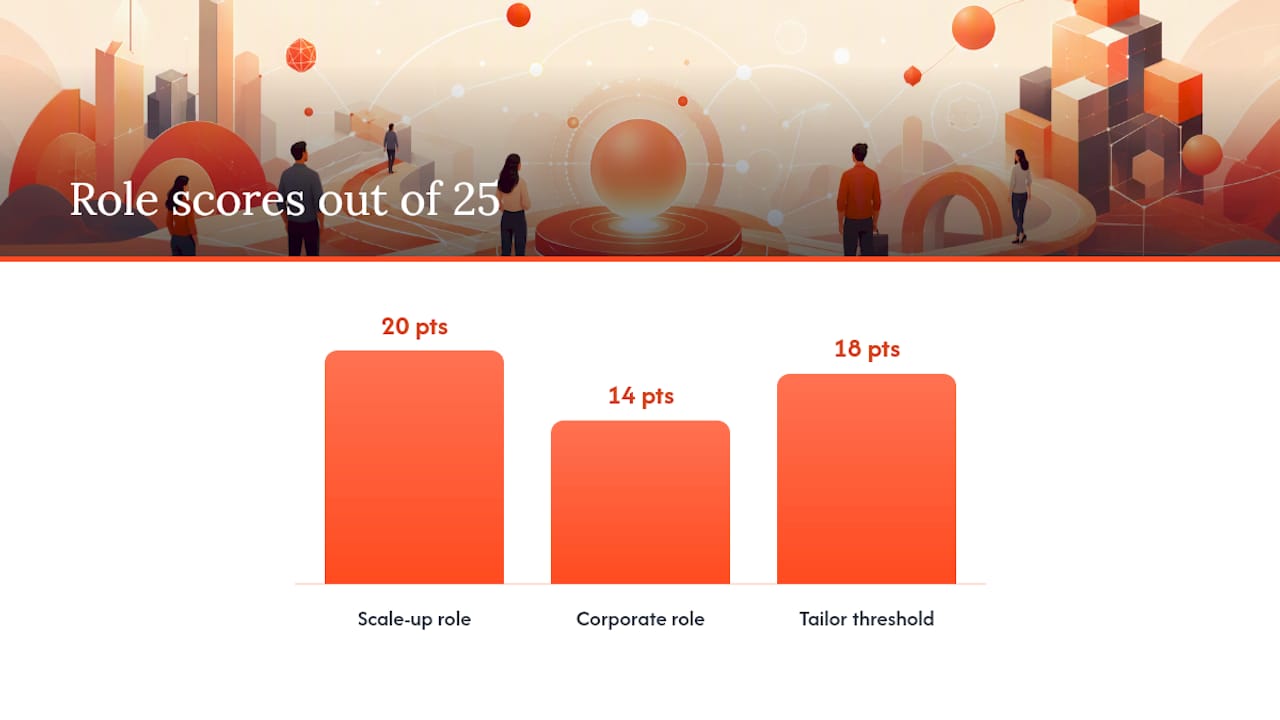
A near-identical role at a large corporate, reposted for the third time in four months, scores 4 on fit, 2 on hiring signal, 4 on pay, 2 on upside (limited growth, rigid structure), and 2 on effort (a lengthy application form and a written task). Total: 14. That one gets a quick, templated application, if you apply at all.
The job-board analysis behind the hiring-signal axis is what separates this from guesswork. Repeat postings and stagnant recruiter activity are measurable, not a hunch.
How do you turn insights into tailored CVs?
Reverse-engineer the job description before you touch your CV. Most postings repeat two or three core responsibilities in different words across the "requirements" and "responsibilities" sections. Pull those out first, then match your strongest evidence to them, not the other way round.
Prioritise proof that maps directly to what keeps appearing: named tools, quantified outcomes, and specific project types. If four of your five shortlisted postings mention a particular reporting tool or methodology, that's your cue to foreground it, even if it currently sits halfway down your CV. Compensation data matters here too. Resume Annex's career intelligence guidance stresses that salary benchmarks only make sense alongside location, seniority and total compensation, not the headline number alone, which is worth remembering when you frame your own expectations in a cover letter or interview.
You don't need a unique CV for every application. Cluster your shortlisted roles by core requirement overlap, then keep one strong, tailored CV per cluster rather than one per posting. A tailored CV built around repeated requirements tends to outperform a generic one precisely because it mirrors the language the employer already used.
A short tailoring checklist for each cluster:
- Match your top three bullet points to the three most repeated requirements
- Swap generic verbs for the outcome language used in the posting itself
- Keep quantified results (percentages, dates, scale) wherever you have them
- Adjust your summary line to name the specific function, not a generic title
- Recheck against the original posting before sending
Pro Tip: When a posting lists a salary range, mirror the top third of it in your expectations during screening calls. Anchoring low rarely earns you goodwill later, and it signals you haven't done your own salary negotiation homework.
What weekly routine keeps your market intelligence current?
Career intelligence isn't a one-off research weekend. Resume Annex frames it as a continuous practice, and the habit that sticks is a short, weekly one rather than an occasional deep dive.
Thirty minutes a week is enough if you structure it:
- 10 minutes: scan new postings across your shortlisted job titles on two or three platforms
- 10 minutes: check salary signals for any role you're actively pursuing, cross-referencing at least two sources
- 10 minutes: log changes, reposted roles, new companies hiring, and shifts in your own scores
Job boards remain the backbone of this routine, and knowing which platforms actually surface fresh, well-described postings saves real time over generic search engines. Beyond boards, informational interviews are underused. A short, honest conversation with someone in a target company surfaces culture and hiring-urgency details no posting will admit to.
This is where automation earns its place. Appliqu runs continuously across more than 100 job boards, matching postings against your profile using the full job description rather than keyword overlap alone, which keeps your weekly routine from turning into hours of manual scrolling. Appliqu writes five tailored applications on its permanent free Explorer tier, and sending starts once you move to a paid plan. Automation is worth considering once you've validated your scoring system manually and know which clusters deserve volume, not before you've worked out what "good fit" means for your own targets.
How do geography and industry shape job market trends?
Job market insights only mean something when you scope them correctly. A hiring surge in software engineering in one metropolitan hub tells you nothing useful if you're targeting logistics roles two regions over. Sector and location interact constantly, and treating "the job market" as one undifferentiated thing is the fastest way to misread your own prospects.
Industry cycles matter as much as geography. Retail and hospitality hiring often spikes seasonally, while sectors tied to public budgets or capital investment move on longer, slower cycles. Career planning guidance for 2026 points to skills-based hiring gaining ground over degree-based screening in several sectors, which changes what you should emphasise on a CV depending on which industry you're targeting.
Regional variation adds another layer. Two cities in the same country can have wildly different demand for the same job title, driven by which employers have a physical presence, remote-work policies, and local cost of living tied to salary bands. If you're applying across regions, don't assume a salary benchmark from one location transfers cleanly to another; adjust your pay expectations to the specific labour pool you're competing in.
The practical takeaway: filter your job-board tracking by both industry and geography before you draw conclusions. A role that looks scarce nationally might be plentiful in a specific city, and a skill that looks in-demand across one industry might be niche in another. Insights without that scoping produce false confidence in either direction.
How do economic indicators affect your job search?
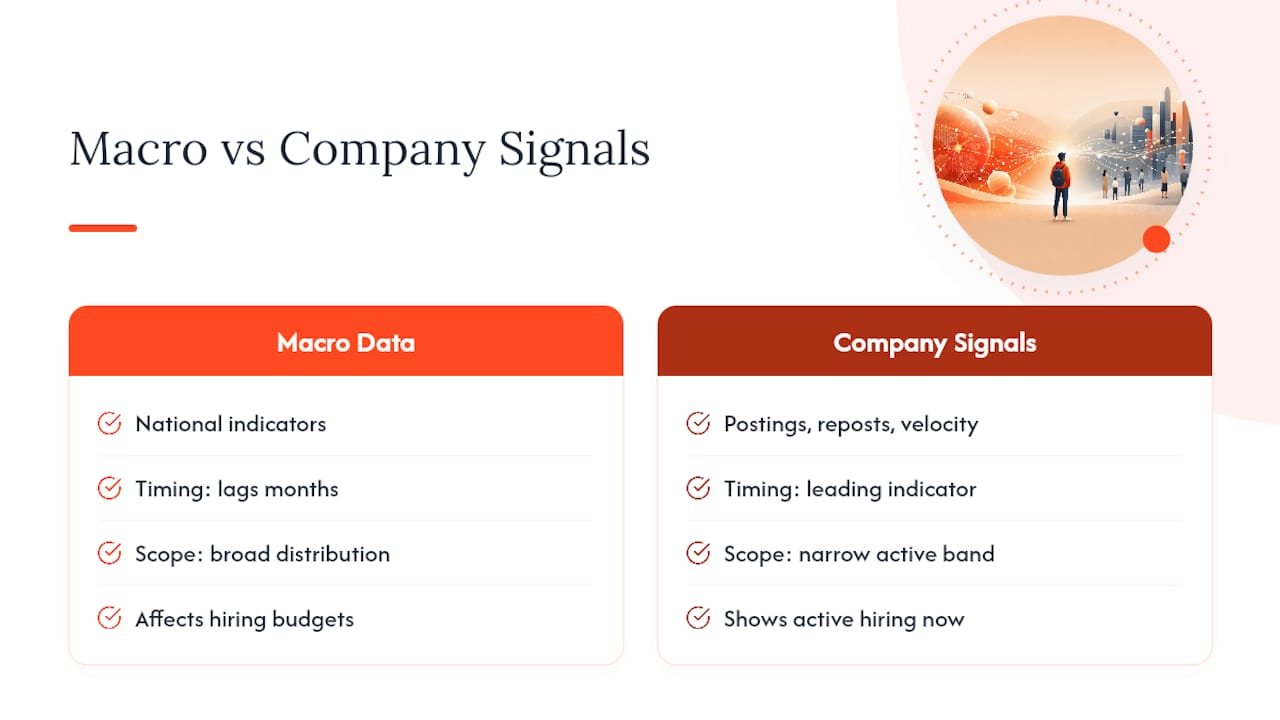
Broad economic data shapes hiring decisions well before it shows up in individual job postings, and reading it correctly saves you from misjudging your own market position. Interest rate movements, sector-specific investment trends and inflation figures all filter down into hiring budgets, though the lag can run into months.
A sector receiving fresh investment typically shows hiring growth before wage growth catches up, which is worth knowing if you're negotiating pay in a "hot" field. Conversely, a sector facing cost pressure often freezes hiring quietly, well before layoffs make headlines, which is exactly why posting velocity and repost patterns matter as a leading indicator you can actually observe.
Treat macroeconomic commentary as context, not a verdict on your own chances. A national slowdown in hiring doesn't mean every company has stopped recruiting; it usually means the distribution has narrowed, with a smaller number of employers still actively hiring while others pause. Your job is to find where that narrower band of activity sits, which is precisely what tracking postings and company-level signals over several weeks reveals.
Don't let headline economic narratives override what you're seeing directly in your own shortlisted postings. If national commentary says a sector is contracting but three of your shortlisted companies are actively reposting roles and growing headcount, trust the specific signal over the aggregate one. Insights work best when you triangulate the macro picture against your own micro-level tracking, rather than picking one and ignoring the other.
How can you judge a company's culture from market data?
Employer reputation leaves a data trail if you know where to look, and most of it sits outside the job posting itself. Review platforms, leadership turnover, and posting patterns each tell a different part of the story, and no single source gives you the full picture.
Repeated reposting of the same role is one of the clearest culture signals available, and it cuts two ways. It can mean a company genuinely struggles to find qualified candidates, or it can mean the role has poor retention and keeps opening up. Cross-reference reposting patterns with employee review sentiment before you decide which explanation fits; a role reposted alongside consistently negative reviews about management points toward retention, not scarcity.
Leadership changes matter more than most applicants realise. A company that has churned through several department heads in a short window is worth researching further before you invest hours in a tailored application, since instability at that level tends to filter down into team stability.
Informational interviews remain the most honest culture signal available, and they're underused precisely because they take more effort than reading a review site. A fifteen-minute conversation with someone currently in the team you're targeting will tell you more about day-to-day culture than a dozen aggregated star ratings, because you can ask the specific questions a review site never covers, like team size, manager tenure, or what actually changed after the last reorganisation.
How should networking connect to your market intelligence?
Networking works best when it's informed by the same signals driving your application decisions, not run as a separate activity. If your scoring system has flagged a cluster of companies as high-fit and high-signal, that's exactly where your outreach effort should go first, rather than spreading requests evenly across every company on your shortlist.
Informational interviews sit at the intersection of research and networking, and they surface opportunities that never reach a job board. A conversation with someone inside a target company often reveals plans to hire before a posting goes live, which gives you a genuine head start over candidates applying cold once the role is public.
Target your outreach the same way you target applications: prioritise people at companies scoring highest on your fit and hiring-signal axes, and keep your ask specific. A request for fifteen minutes to understand a particular team's current priorities gets a far better response rate than a generic "can we connect" message, because it signals you've already done your research rather than asking someone else to do it for you.
Treat every conversation as a data point to feed back into your scoring. If someone tells you a team is overwhelmed and actively expanding, that's a hiring-signal upgrade. If they mention recent departures without explanation, that's a flag worth weighing against the posting's other merits. Networking and market intelligence should update each other continuously, not run on separate tracks.
Why targeted intelligence beats volume
Most job seekers still believe more applications equal more interviews. The maths rarely works that way. A poorly matched application costs you the same thirty minutes as a well-targeted one, but returns far less, and doing that fifty times a week burns out your judgement long before it produces results.
What tends to work is unglamorous: a shortlist, a scoring system, and the discipline to only go deep on roles that earn it. Appliqu was built around that same logic, using semantic matching rather than keyword stuffing to find genuine fit.
Start small. Score five roles this week using the framework above, and see how differently you'd approach applying to each.
Alex
Let Appliqu run your job-board tracking for you
Everything in this guide, scoring, tailoring, weekly tracking, takes real time to do by hand every week. Appliqu is built to run that routine continuously, scanning over 100 job boards around the clock and matching postings against your profile using the full job description, not just keyword overlap, so the roles that surface are ones actually worth your tailoring effort.
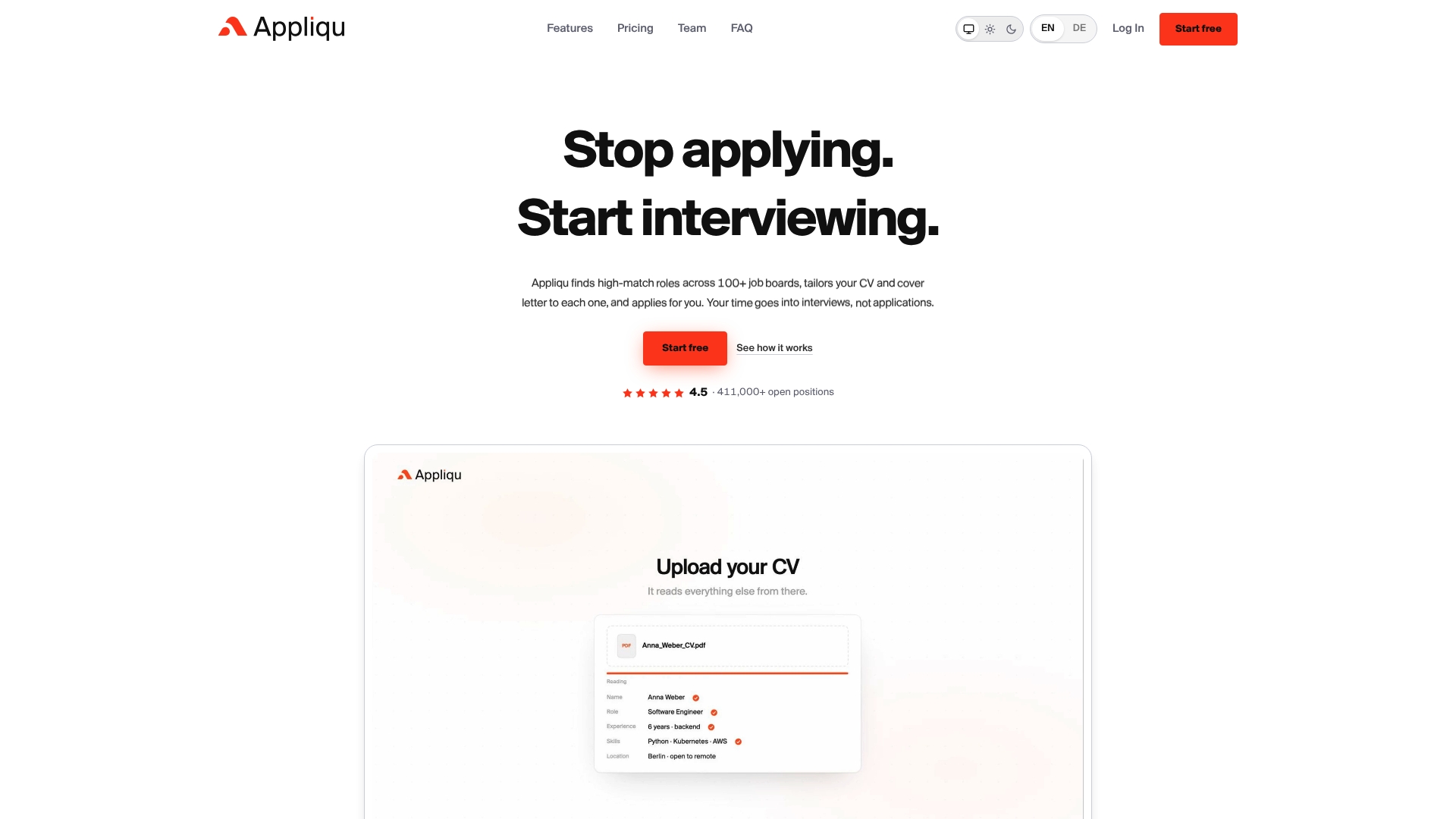
Appliqu's Explorer tier is permanently free and writes five tailored applications so you can see the matching quality before committing to anything. Paid plans offer increasing numbers of applications and additional features, ranging from entry-level to premium services, allowing you to choose the level of hands-on involvement, approval workflows, or automation that suits your needs.
If the scoring system in this guide made sense but the manual tracking sounds like a second job, that's precisely the gap Appliqu fills. Visit Appliqu to see which roles it surfaces for your profile first.
Sources
- How to choose a career | Prospects
- Job-market research: how to do it and step up your career | Medium
- Career intelligence: track your market value | Resume Annex
FAQ
What Are Job Market Insights For A Job Seeker?
They are the specific, applicant-facing data on skills demand, salary benchmarks, hiring velocity and company signals that help you decide where to apply and how much to tailor each CV.
How Do I Score A Job Before Applying?
Rate it out of 5 on fit, hiring signal, pay, upside and effort, then add the totals; scores above 18 out of 25 deserve full tailoring, and scores below 12 deserve a fast or skipped application.
How Often Should I Check Job Market Data?
Thirty minutes a week is enough, split across scanning new postings, checking salary signals, and logging changes to your shortlist.
Can Appliqu Help Me Apply These Insights?
Appliqu matches postings from over 100 job boards against your full profile using the complete job description, and writes five applications free on its Explorer tier before paid sending starts with Core.
Are Sites Like Glassdoor Reliable For Salary Data?
They're useful as directional benchmarks rather than exact figures, so cross-check pay ranges against at least one other source before setting your expectations.